Why Do We Fight Ourselves When We Want Peace of Mind?
Making Peace Within Through Faith in Mind
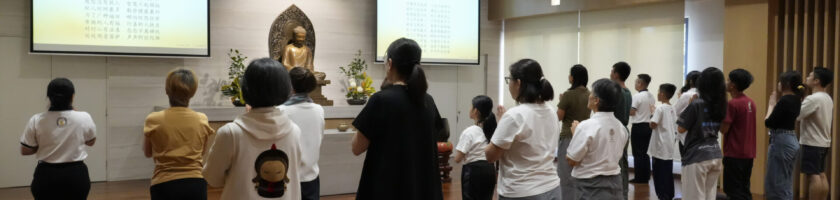
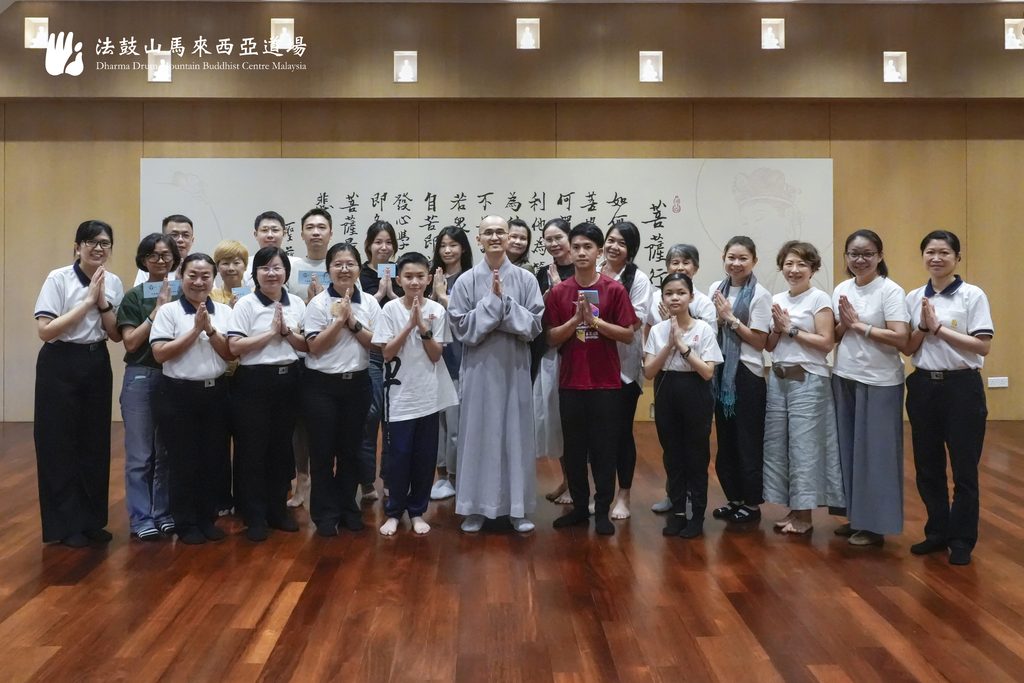
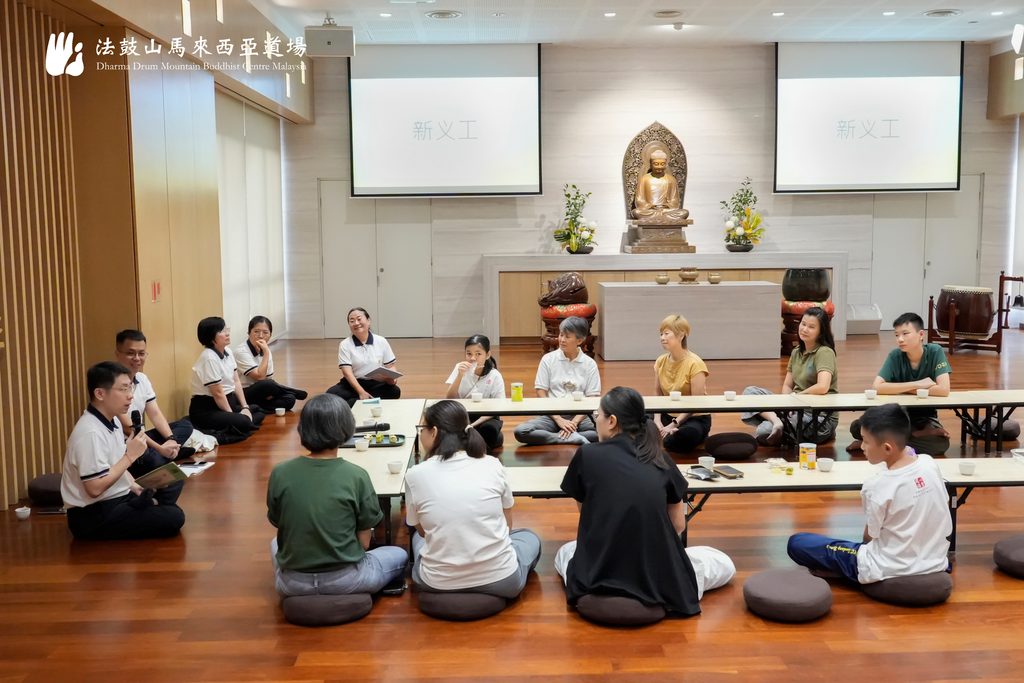
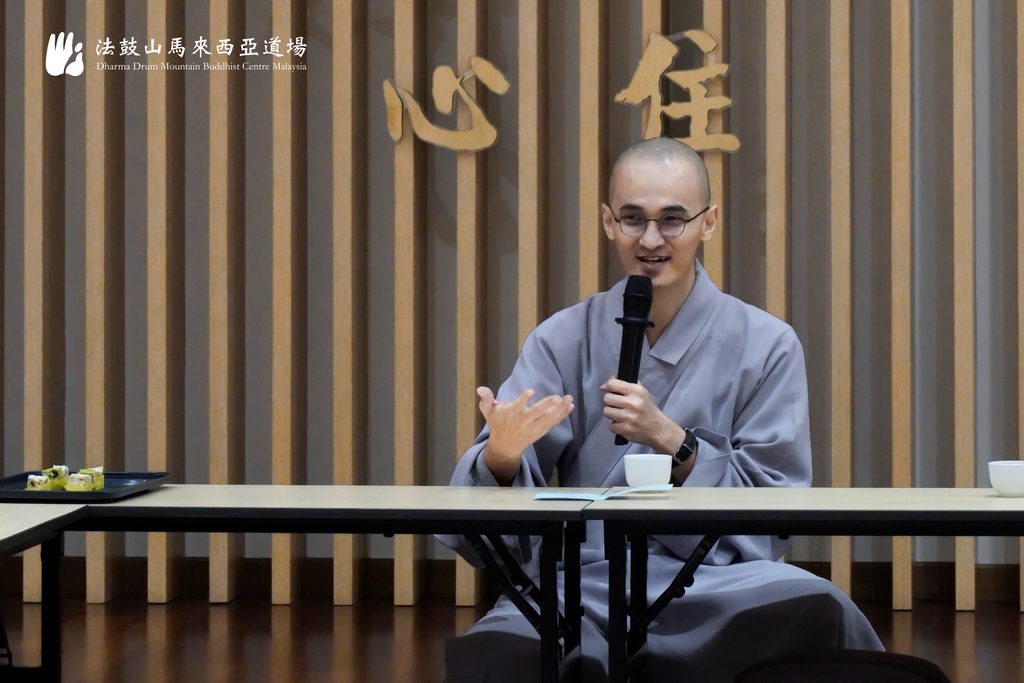
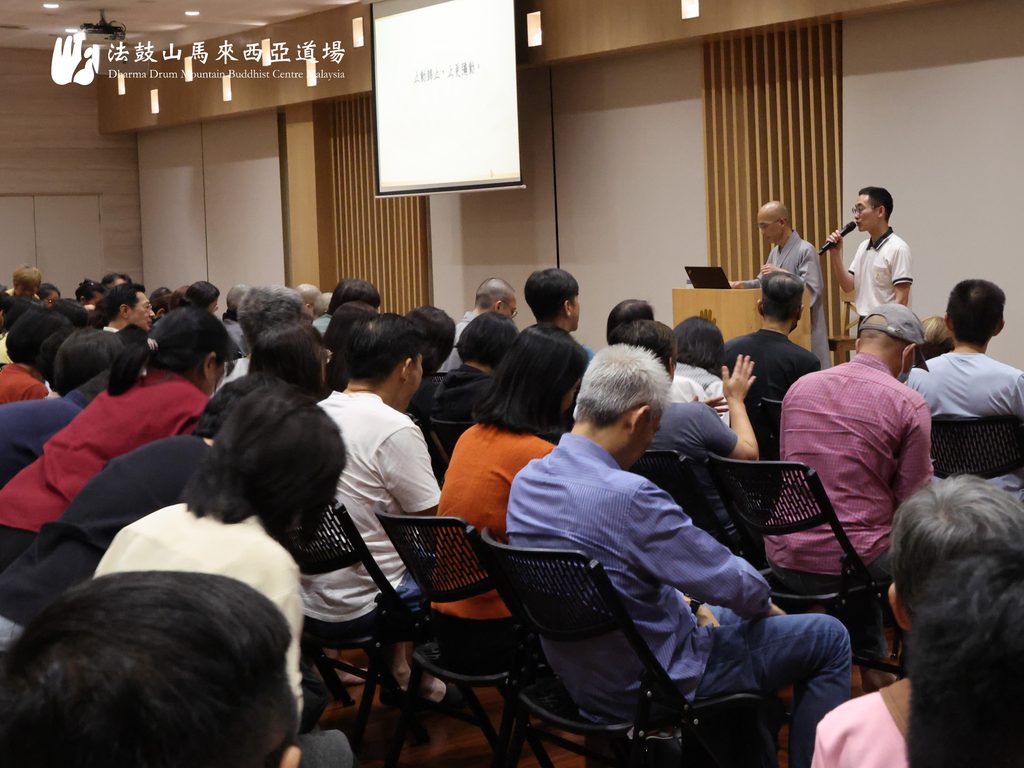
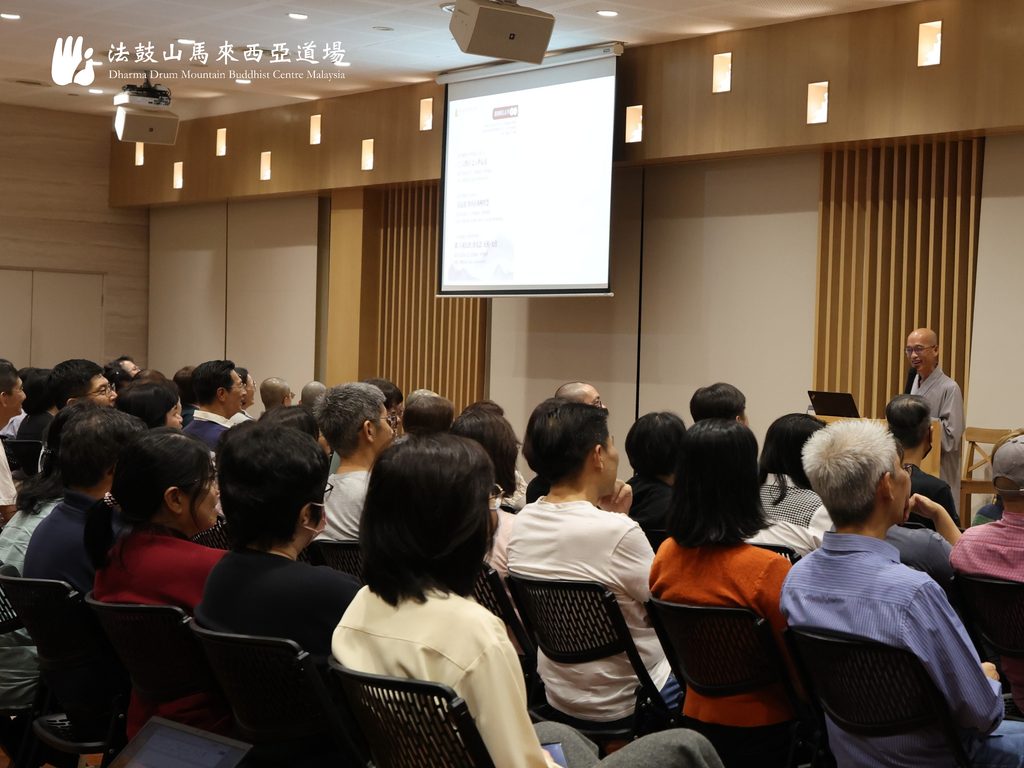
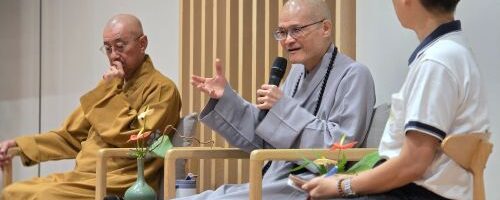
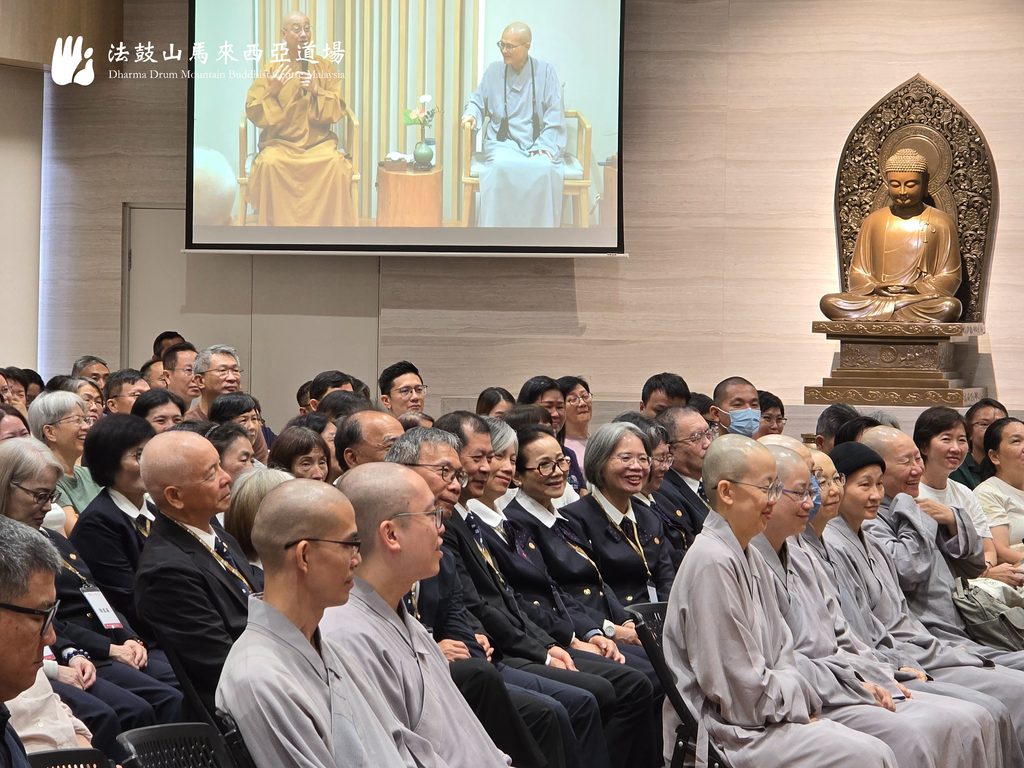
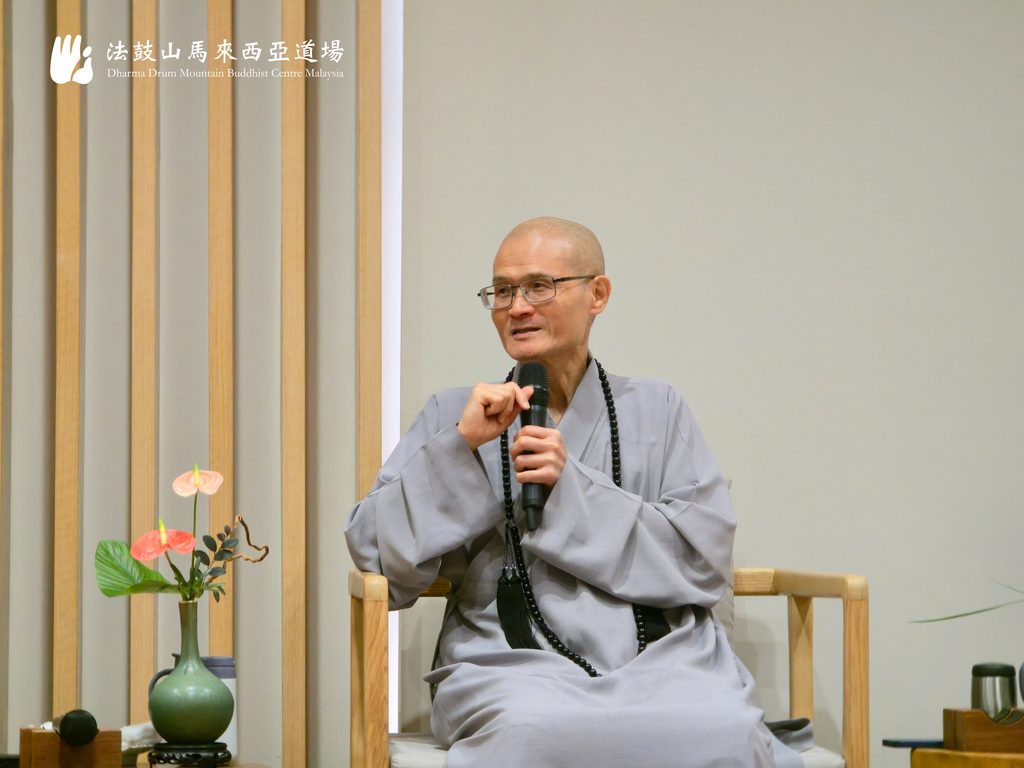
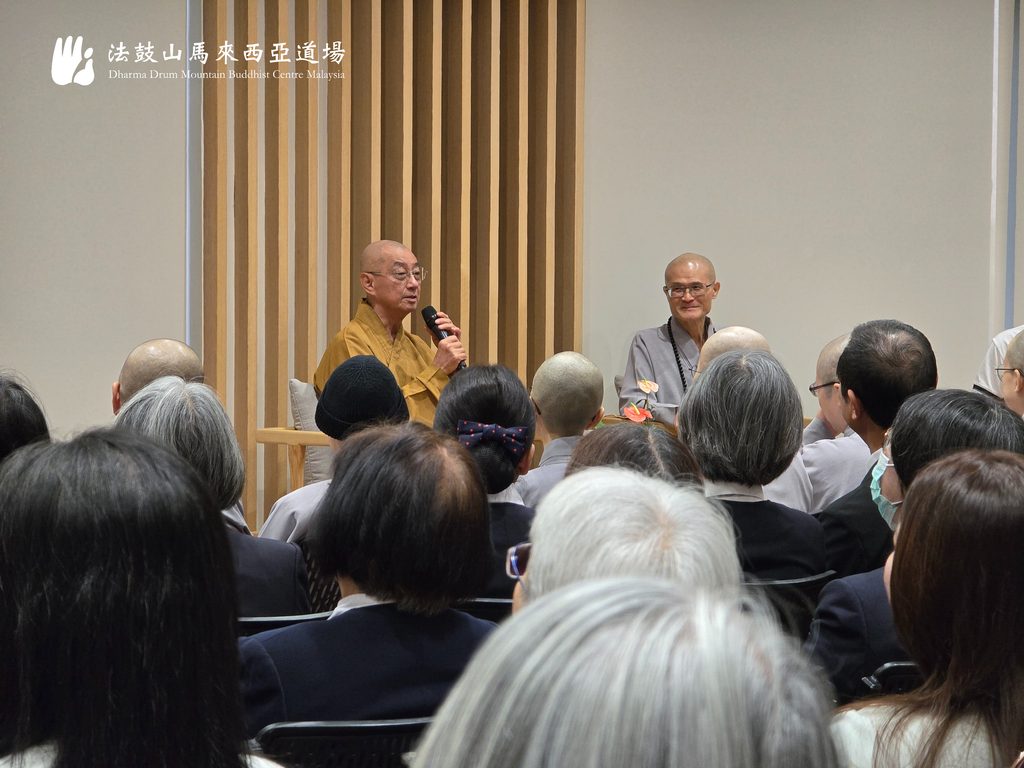
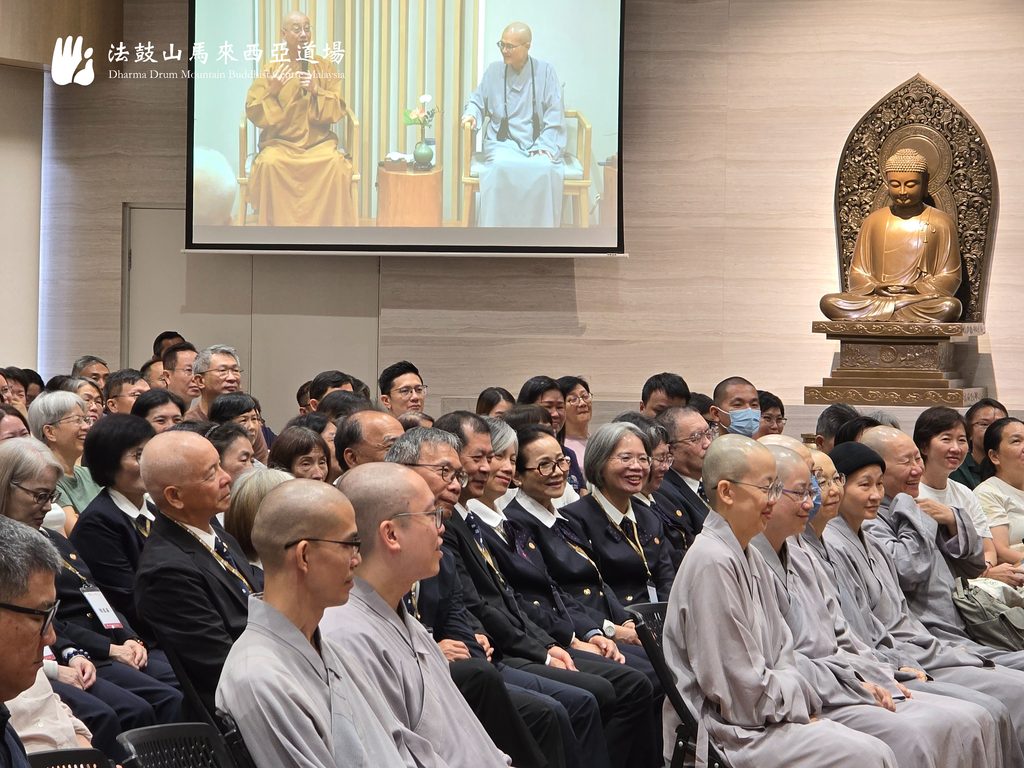
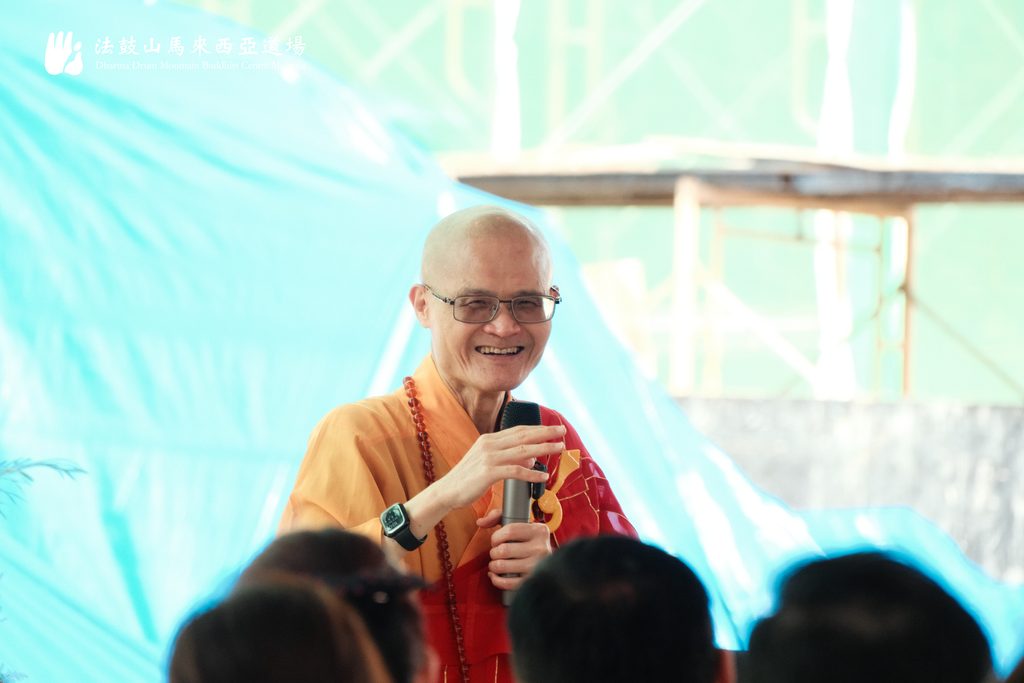
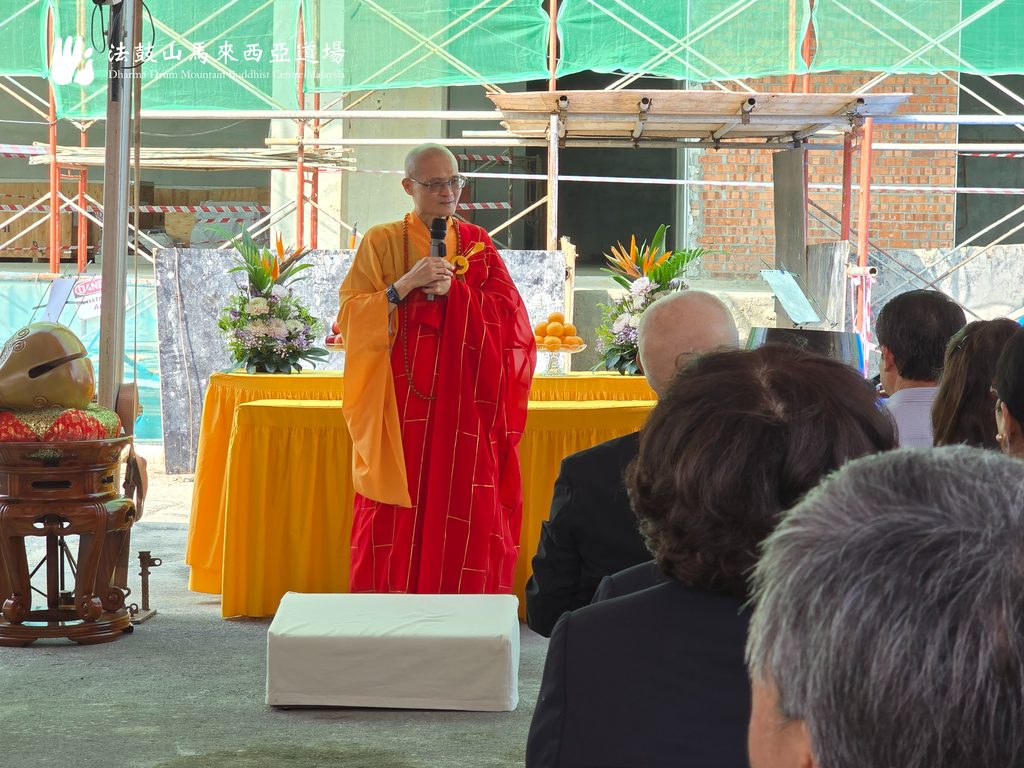
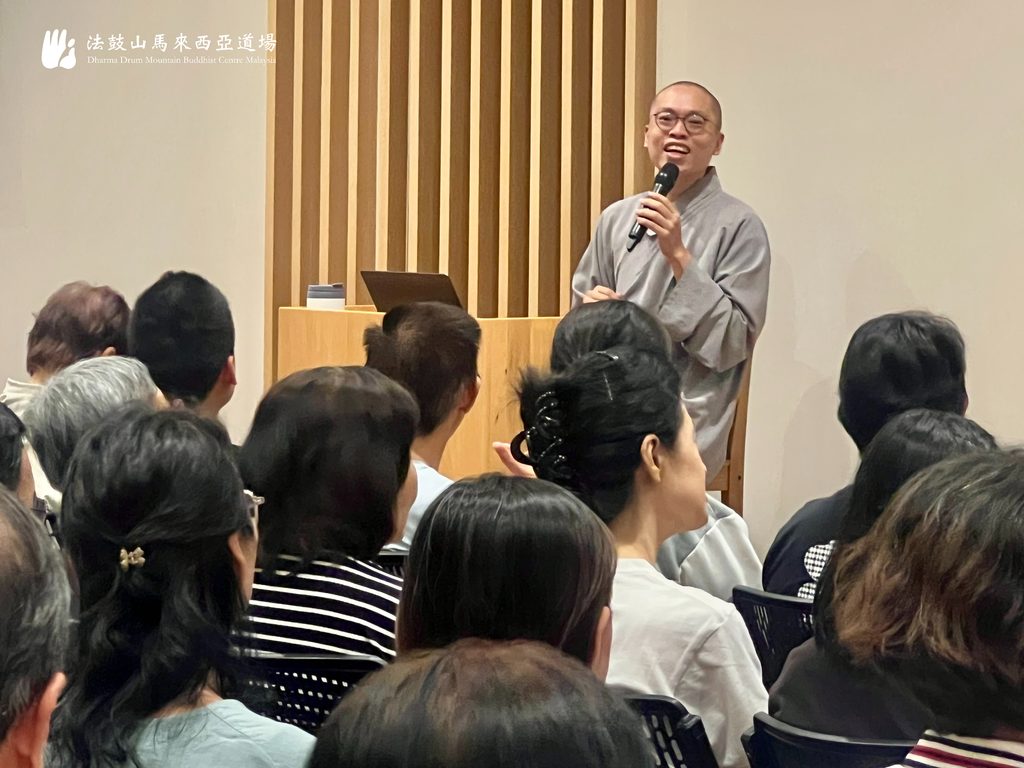
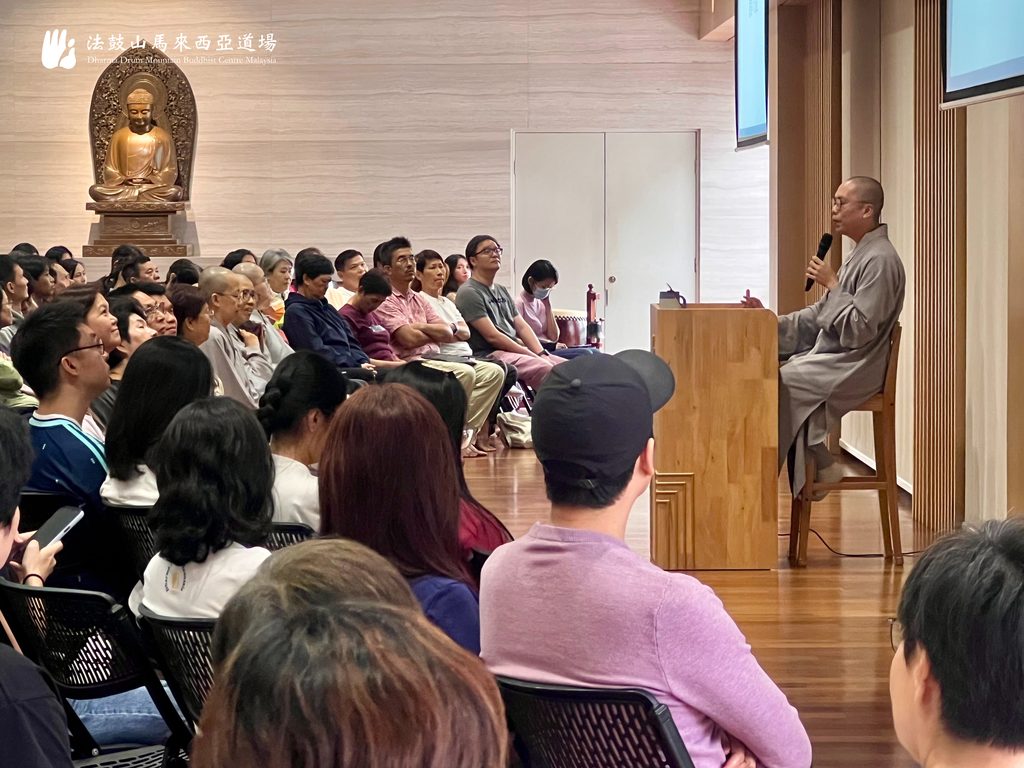
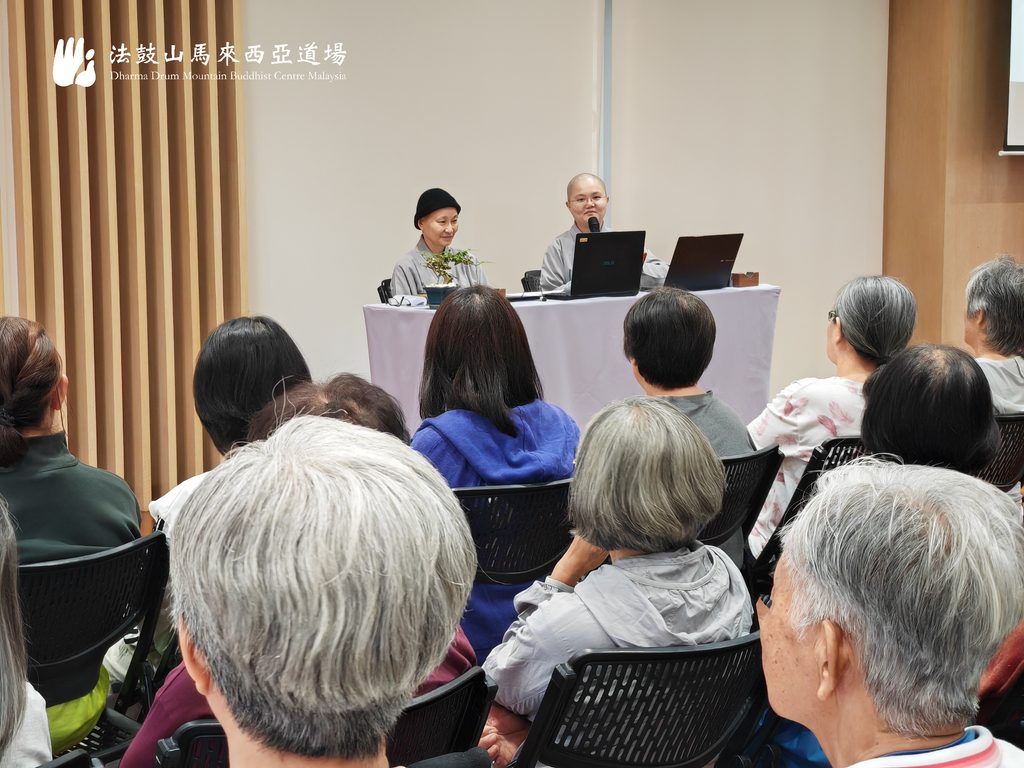
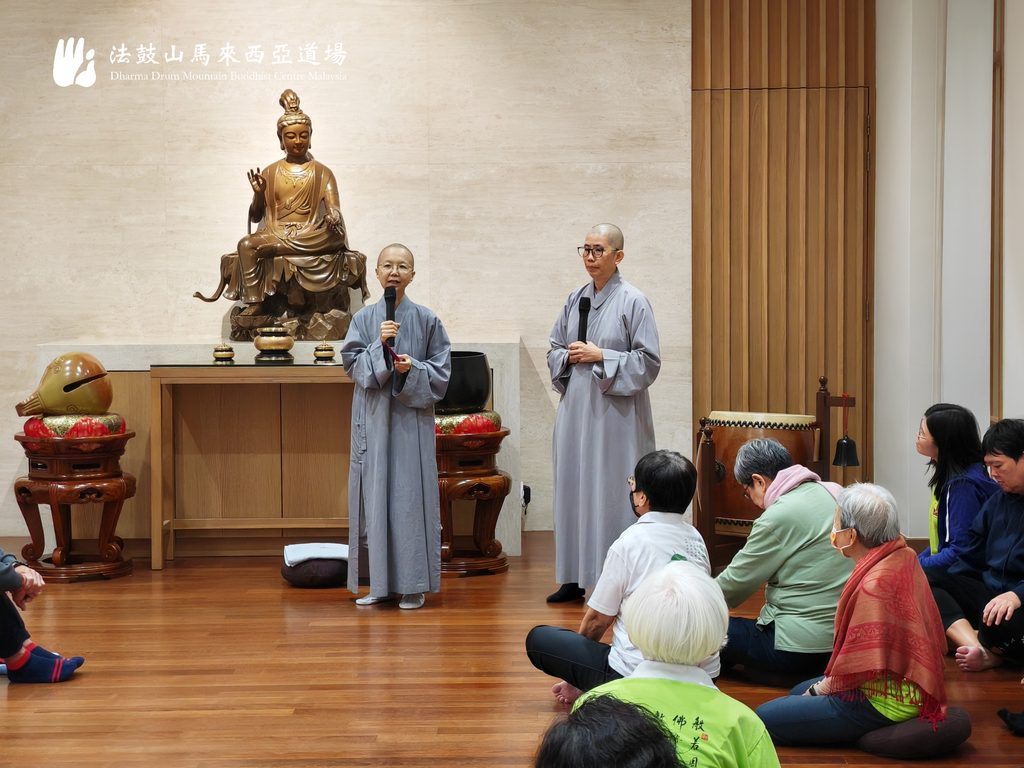
We try to hold on to what we like and push away what we dislike. We long for a settled mind, yet often find ourselves torn between wanting and resisting. On 19 October, more than 150 people attended a talk on Chinese Chan at Dharma Drum Mountain Buddhist Centre Malaysia, entitled “Making Peace Within Through Faith in Mind”. Venerable Chang Kuan, Vice President of Dharma Drum Sangha University, drew on Chan encounter dialogues – records of exchanges between Chan masters and their students, verses and examples from meditation practice to explore how observing our own minds can help us make peace within and put what we learn into practice in everyday life.
Who Is Binding You?
Faith in Mind is a 146-line Chan poem traditionally attributed to Master Sengcan, the Third Patriarch of the Chan school. Here, “faith in mind” means trusting that everyone possesses Buddha-nature and has the potential to awaken and attain Buddhahood. Venerable Chang Kuan also recounted Chan dialogues about finding peace of mind, repentance and liberation. In one, Daoxin, who would become the Fourth Patriarch, asked Sengcan for a method of liberation. “Who is binding you?” Sengcan asked. “No one,” Daoxin replied. If no one was binding him, Sengcan asked, why seek liberation? The exchange invites us to look again at how our own attachments become the bonds that bind us.
Seeing How Likes and Dislikes Divide the Mind
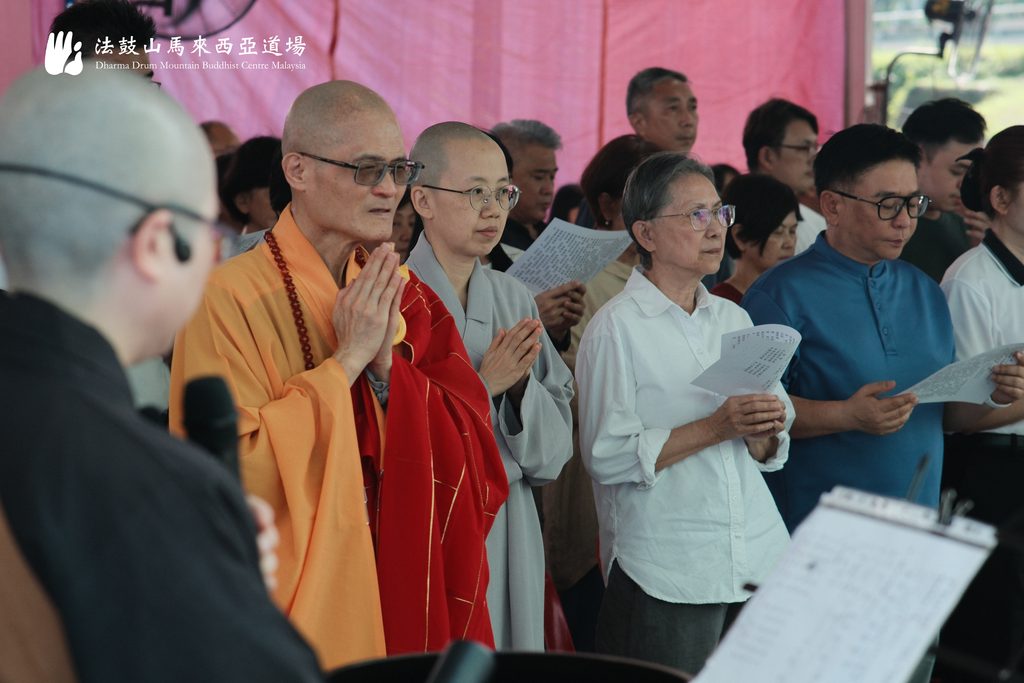
“The Supreme Way is not difficult, if only you do not pick and choose.” Venerable Chang Kuan led the audience in reciting Faith in Mind two lines at a time, identifying pairs of opposites such as love and hate, acceptance and resistance. To explore the “Supreme Way,” he turned to the Four Great Vows: why does “I vow to attain supreme Buddhahood” come last? Helping sentient beings, ending afflictions and learning Dharma methods all put the aspiration to Buddhahood into practice. Sentient beings are innumerable and their afflictions differ, so different methods are needed to work with the mind. In everyday life, judging everything solely by whether it suits us can divide our experience into rigid, opposing extremes. “Neither love nor hate, and you will clearly understand.” Venerable Chang Kuan encouraged the audience to notice how their likes and dislikes shape their judgements when dealing with situations.
When the Calm We Seek Feels Unfamiliar
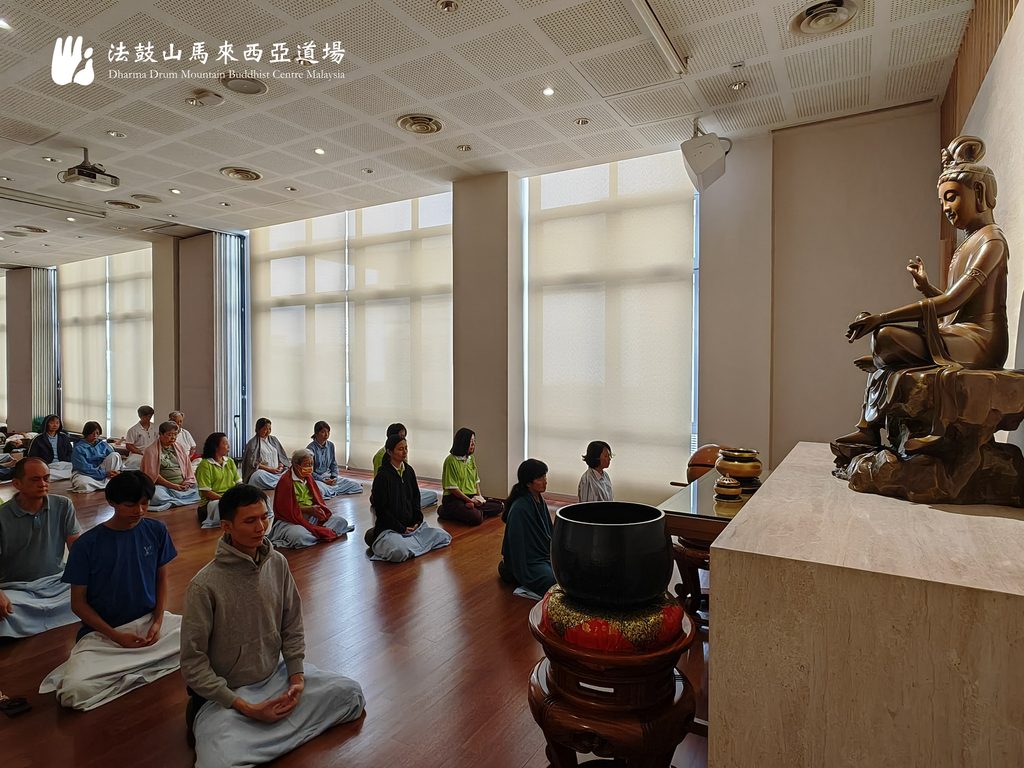
The same tension can arise in meditation. Some people long for a settled body and mind, yet become anxious when they actually settle down. A mind accustomed to being busy may resist this unfamiliar calm. This illustrates the poem’s teaching that conflict between acceptance and resistance is an affliction of the mind. Venerable Chang Kuan compared our changing physical and mental states to waves. Whether we feel calm or unsettled, we can recognise what is happening, relax the body and mind, and return to our method. The point is not to chase calm or resist disturbance, but to see both as changing conditions and to return to the method. In this way, we learn to keep practising amid change.
Giving Faith a Practical Foundation
The talk concluded with the story of Suddhipanthaka, a disciple of the Buddha whose poor memory made it difficult for him to retain what he recited. Frequently scolded by his elder brother, he eventually received the Buddha’s patient guidance. Repeating “I sweep away the dust; I remove the dirt,” he made sweeping the ground his practice and eventually attained liberation as an arhat. Venerable Chang Kuan used the story to encourage everyone to persevere with a method suited to their individual disposition and capacity. Family life, work and daily chores all offer opportunities to recognise attachment and aversion and loosen their grip. In this way, confidence in our capacity for Buddhahood is grounded in everyday practice.
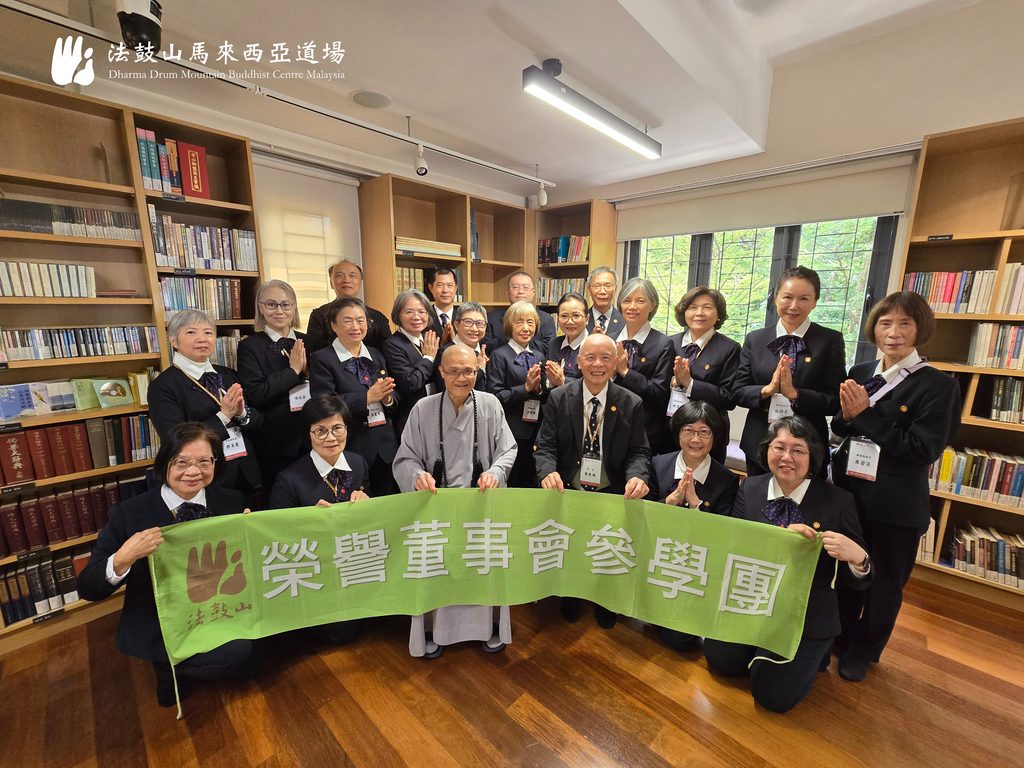
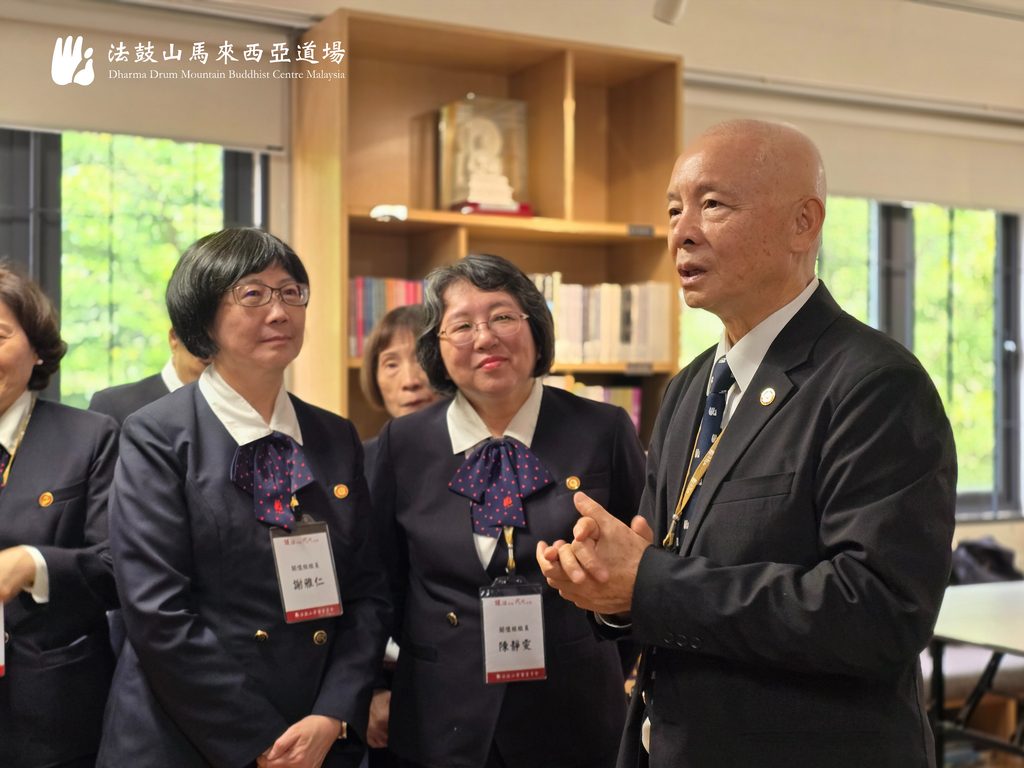
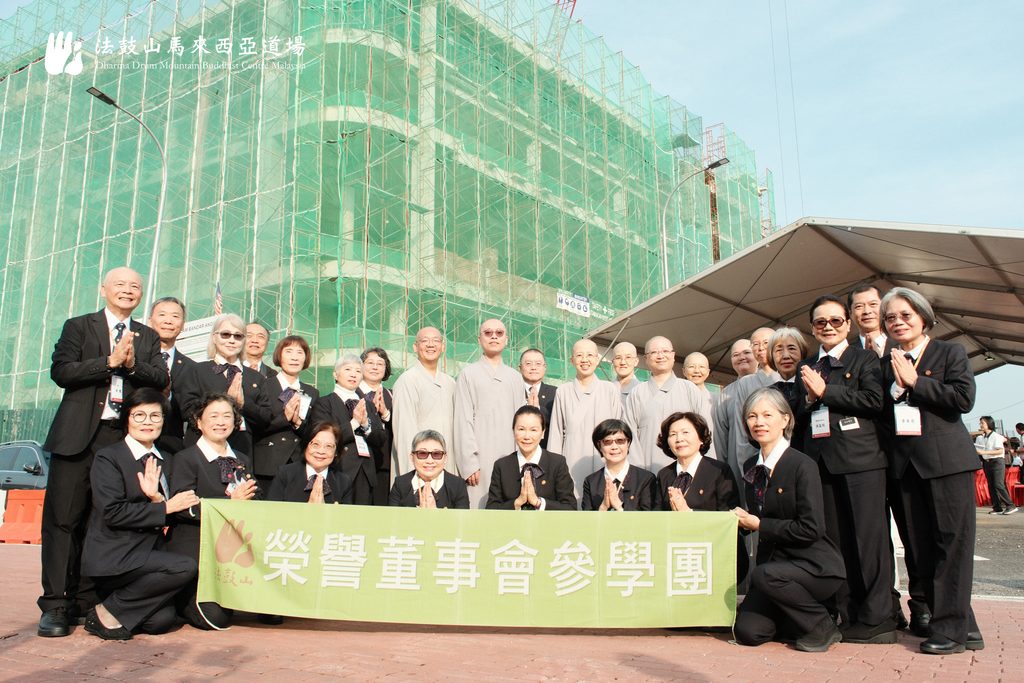
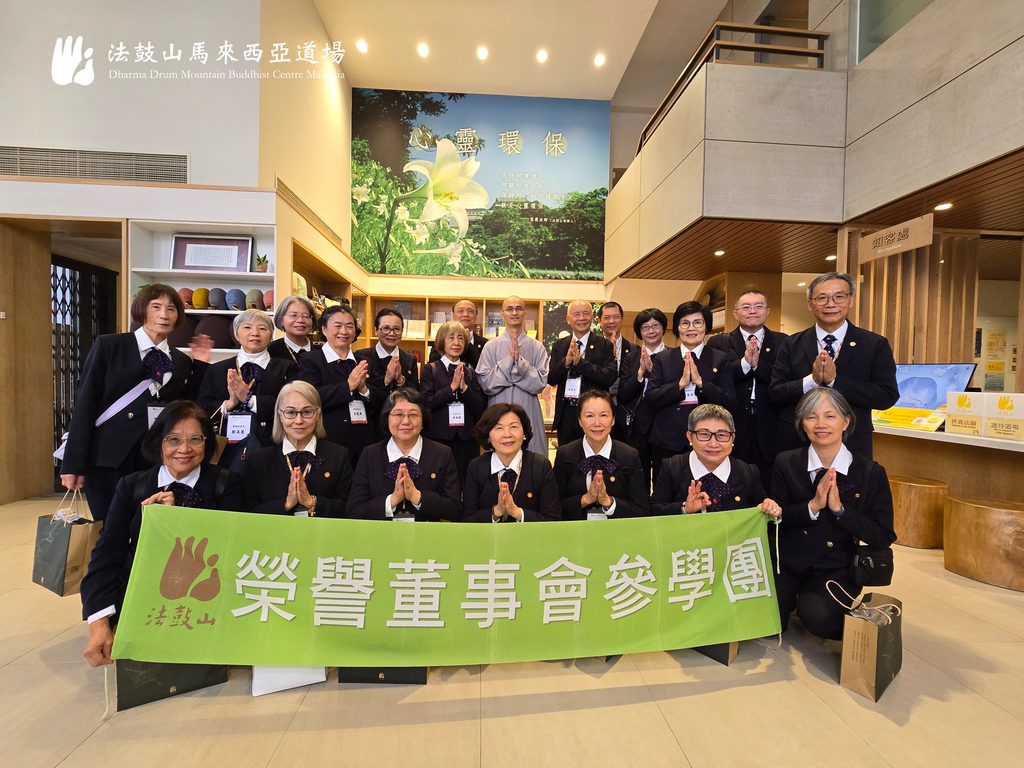
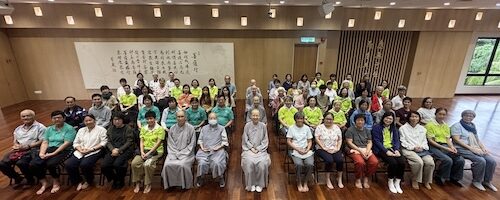
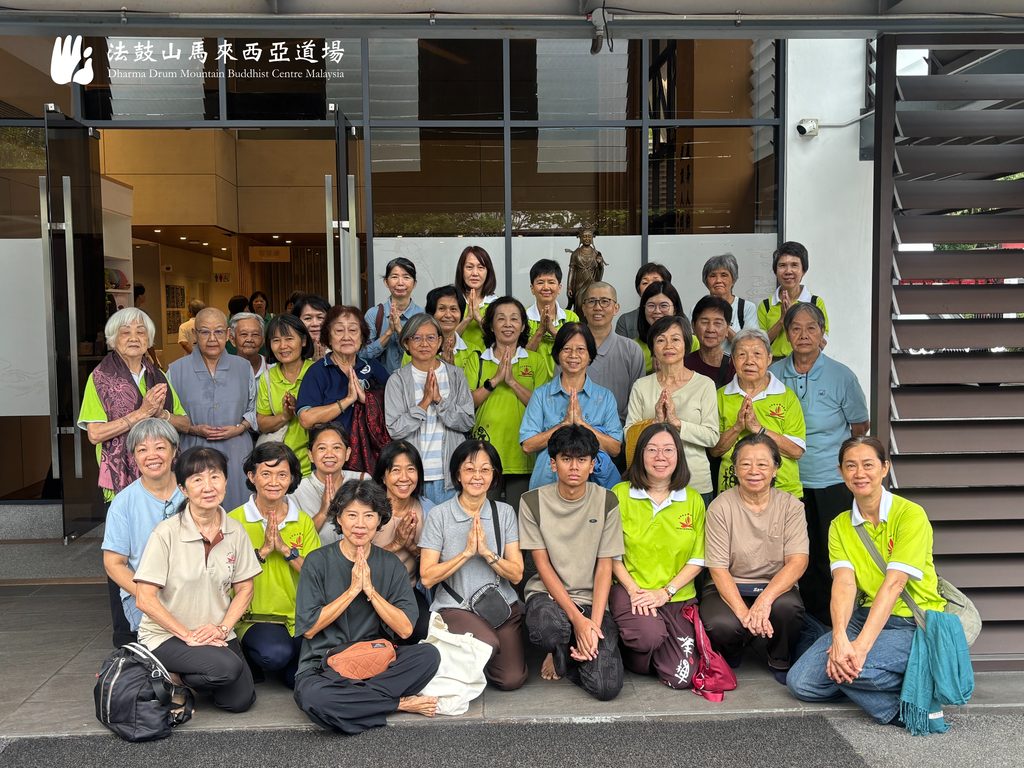
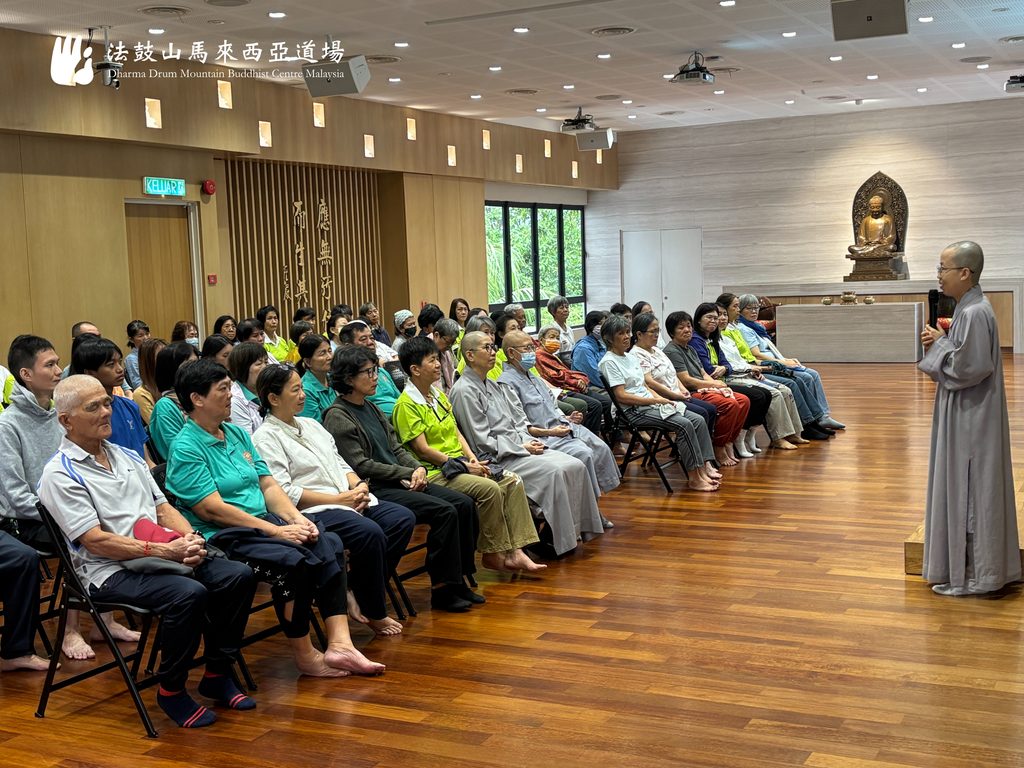
From 30 October to 2 November, we welcomed a 20-member delegation from Taiwan, led by Huang Chu-chi, President of the Dharma Drum Mountain (DDM) Honorary Board of Directors. With our new centre’s main structure complete, they joined us for the sprinkling and topping out ceremony and offered their blessings for the work ahead.
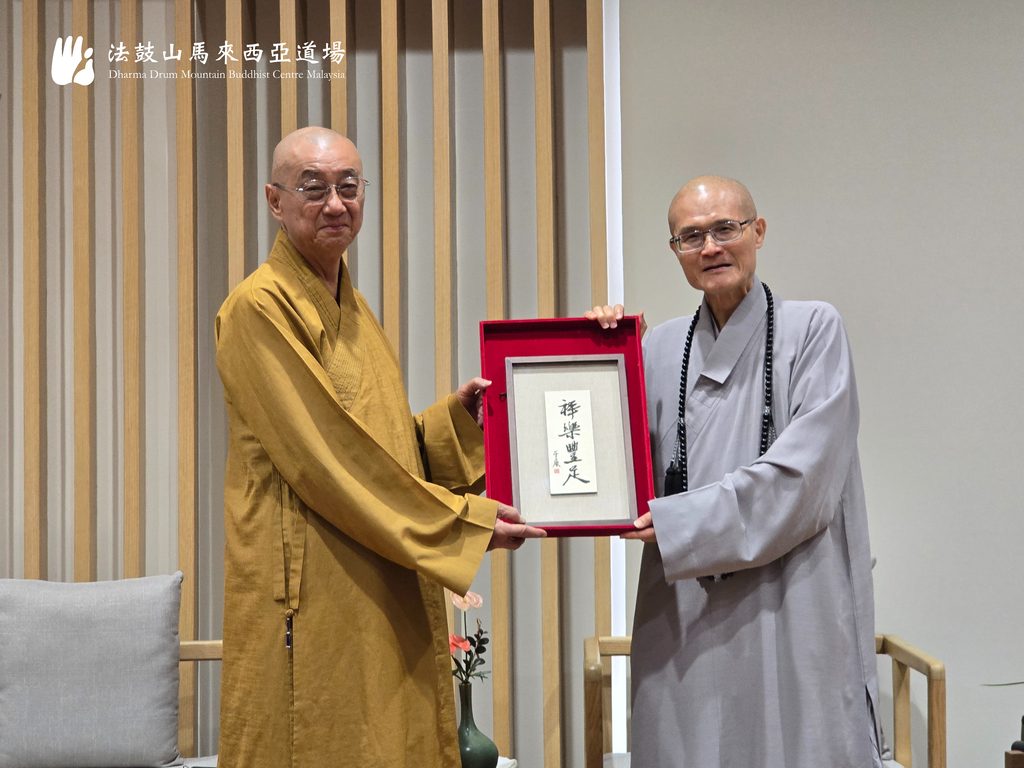
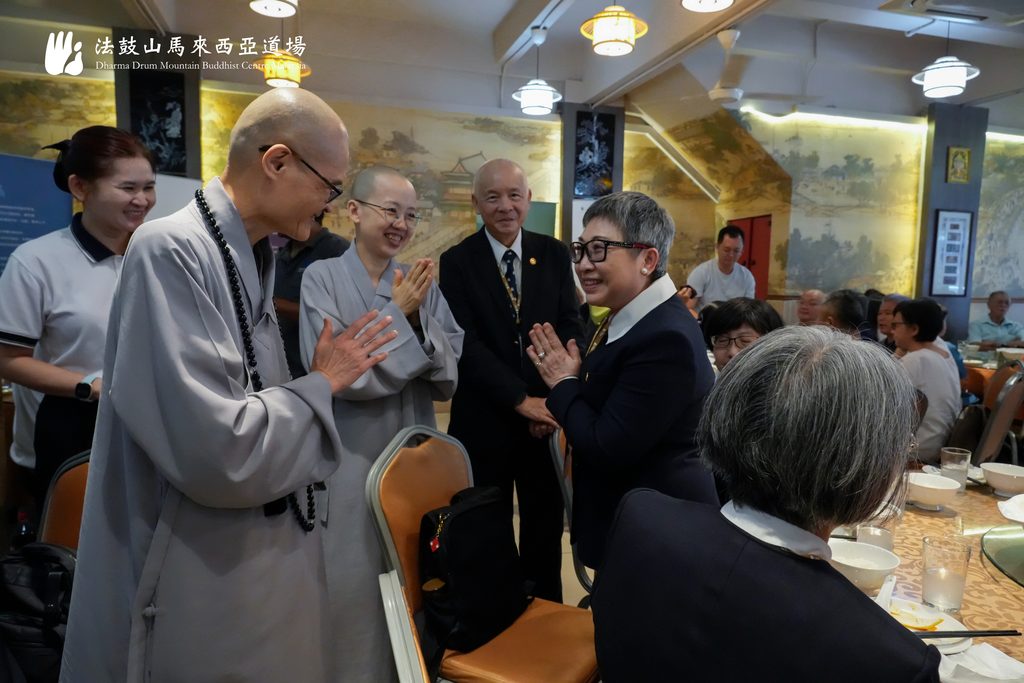
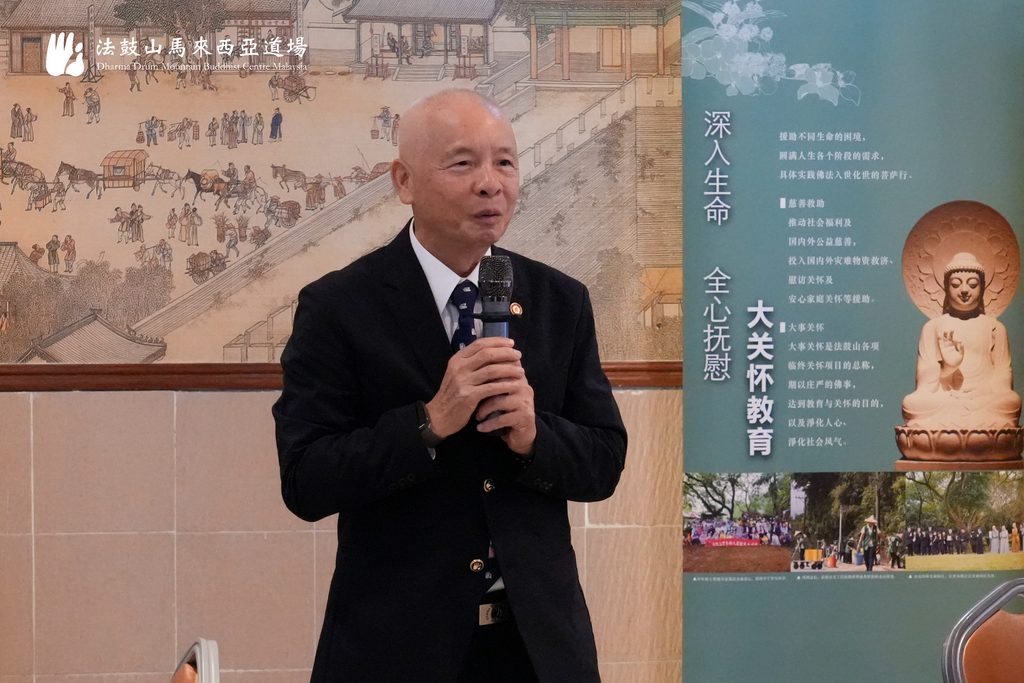
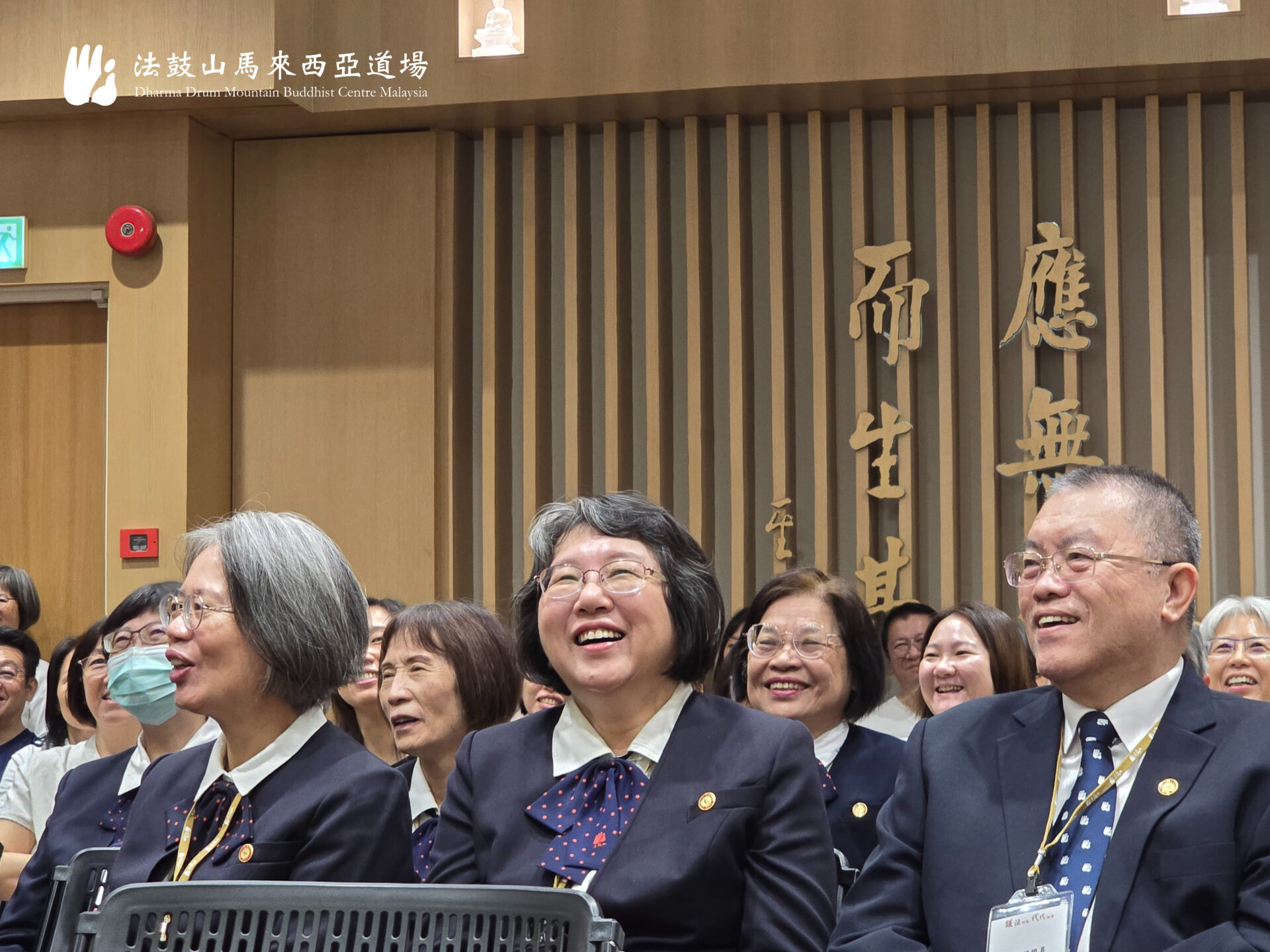
At the fellowship luncheon, four new Malaysian members joined our Honorary Board family and received their appointment letters from Venerable Guo Huei, Abbot President of DDM. Recalling Master Sheng Yen’s teaching, he likened our combined support to many lamps bringing light to more people.
Venerable Chang Zao, our Centre Director, shared that people here and abroad are already keen to learn and practise at the new centre. At a recent seven-day Chan retreat, some Indonesian participants followed the teachings through translation.
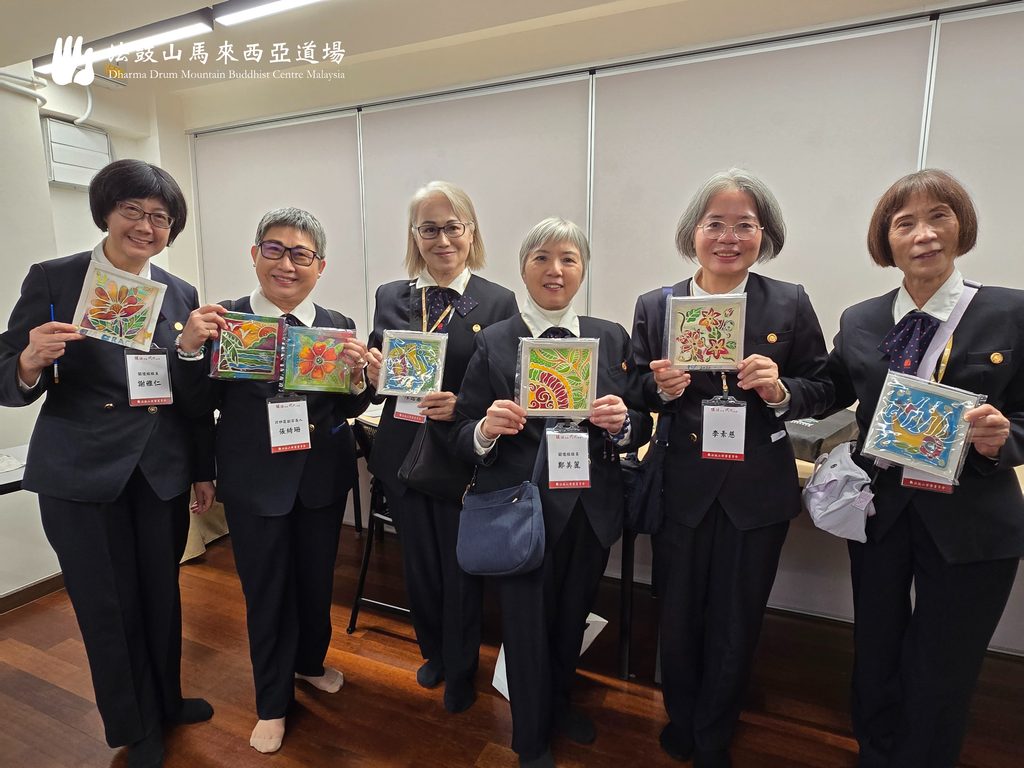
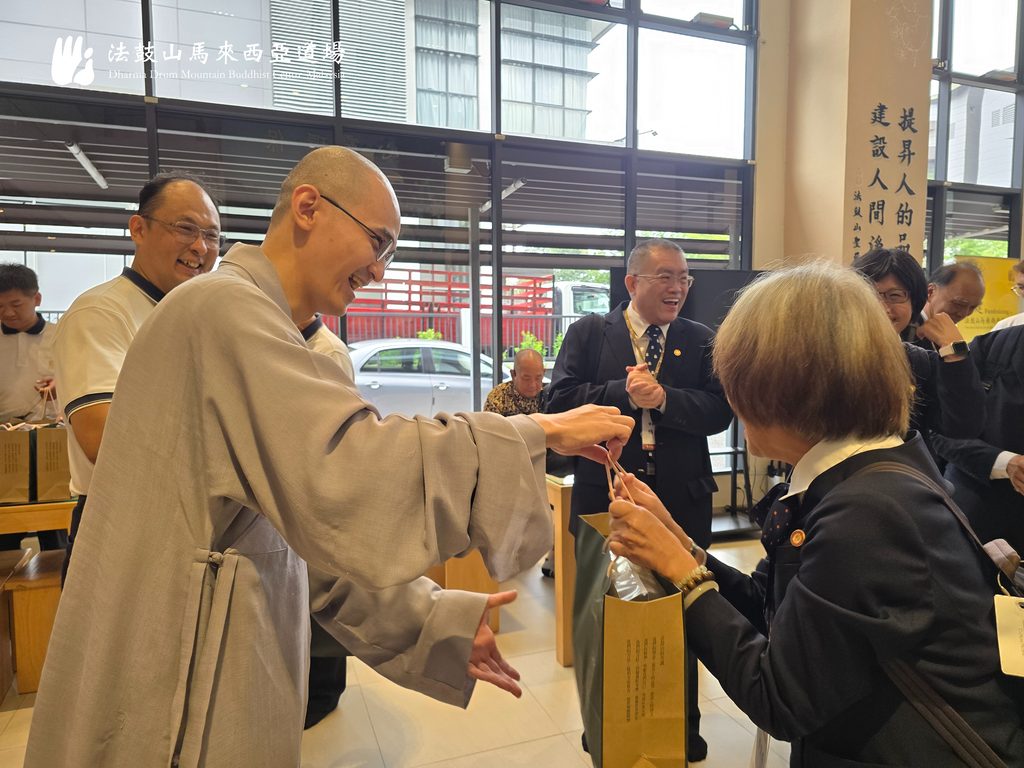
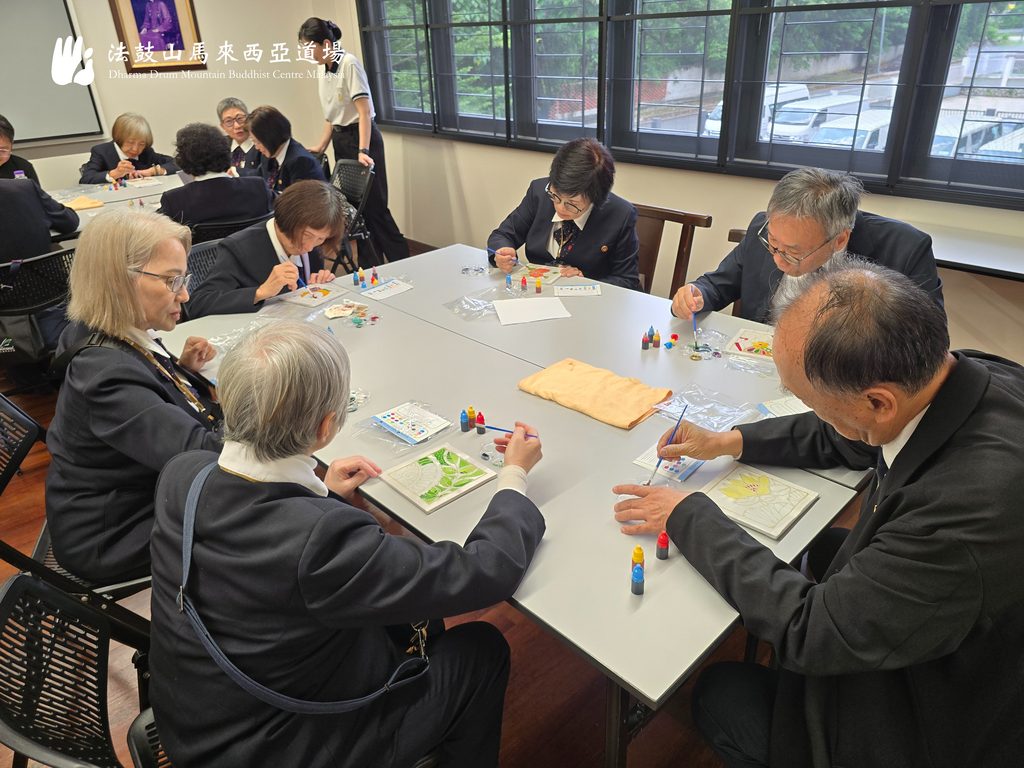
Guests also attended a dialogue between Venerable Guo Huei and Venerable Chi Chern on the Diamond Sutra and tried their hand at batik painting. Venerable Chang Li then presented each guest with a gift bag of six Malaysian specialities as a token of our gratitude.
Huang Chu-chi encouraged everyone to share the joy of Dharma practice with their families. We hope a cup of kopi-O (black coffee) or a pot of vegetarian bak kut teh (herbal soup) will bring back warm memories of Malaysia. Thank you for your care and support. We look forward to welcoming you back for our new centre’s opening, expected in 2028! 💝
Our New Centre Takes Shape: A Future Hub for Chan Practice and Dharma Teaching in Southeast Asia
Completion expected in 2028
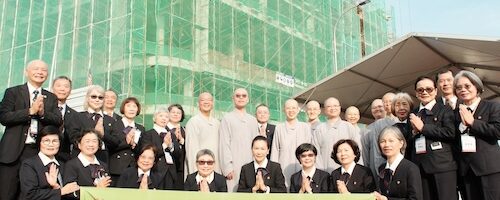
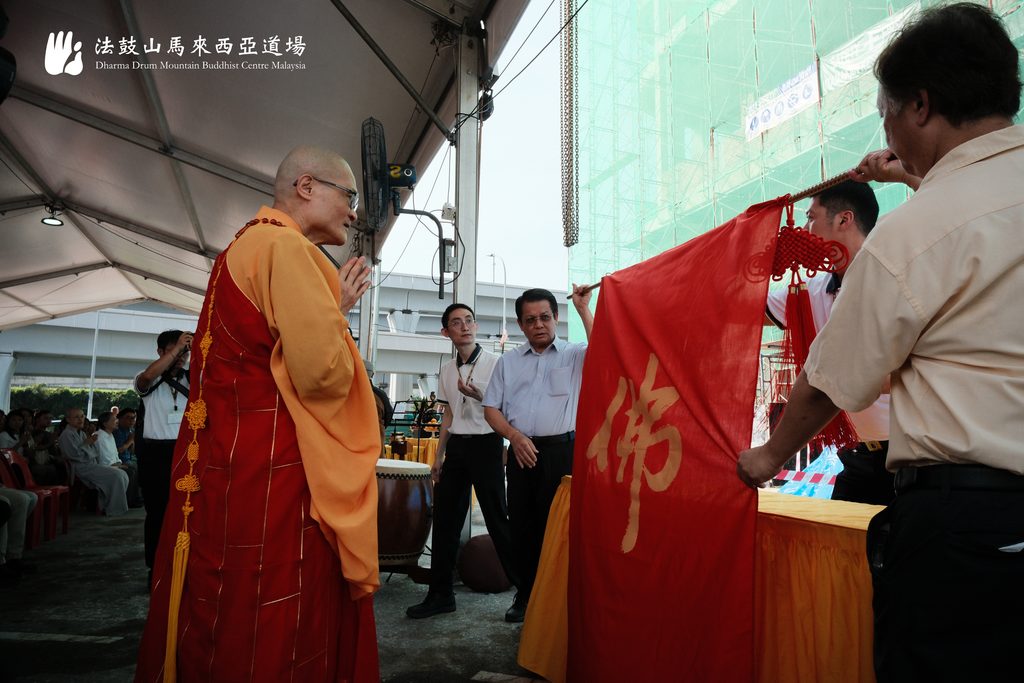
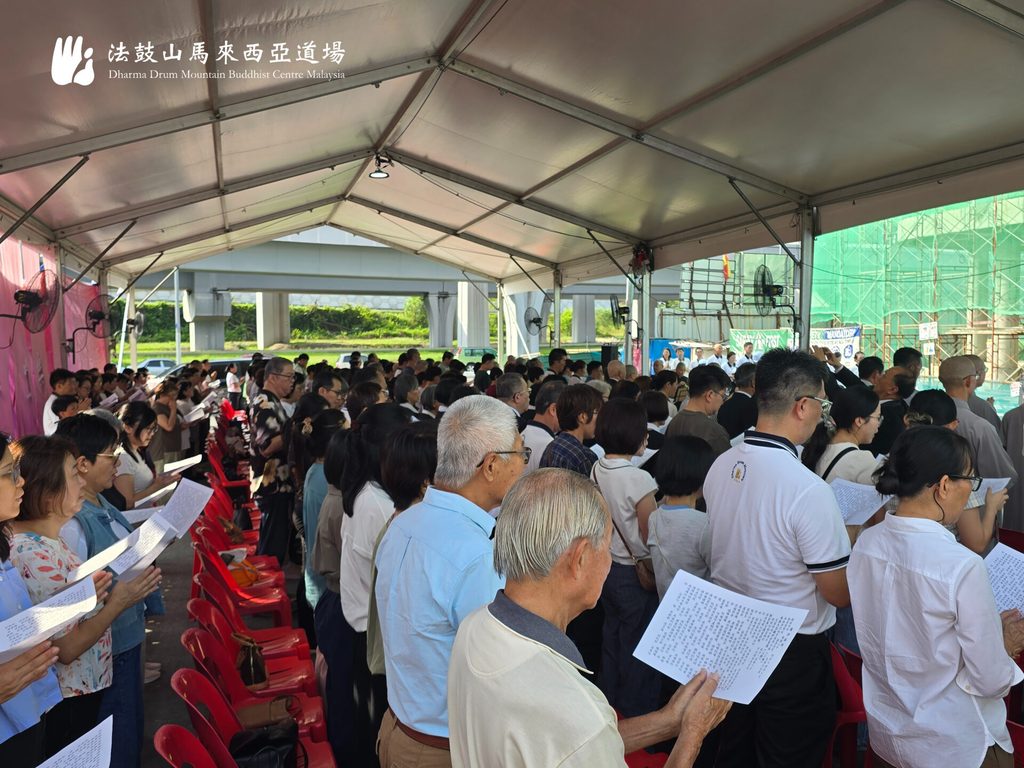
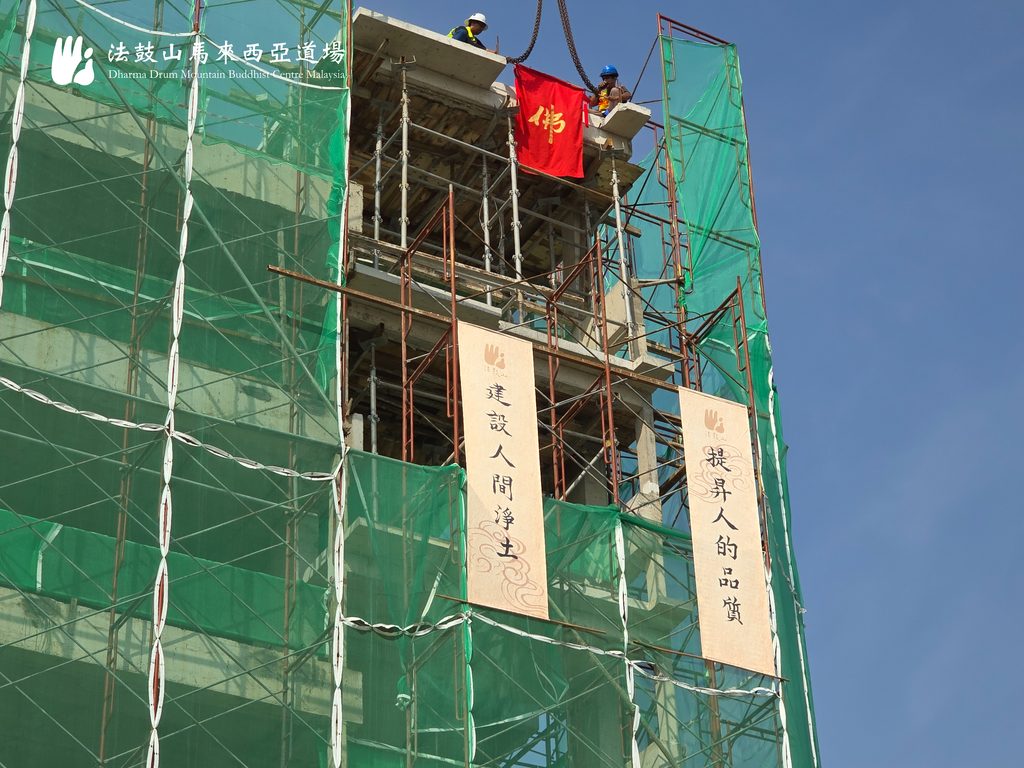
On 31 October, more than 250 guests, members of the Dharma Drum Mountain (DDM) Honorary Board of Directors, Dharma supporters and volunteers gathered at the construction site of DDM Buddhist Centre Malaysia’s new centre. Located in Kwasa Damansara, Shah Alam, Selangor, the centre is being built on land designated for religious use. Venerable Guo Huei, Abbot President of DDM, presided over the sprinkling and topping out ceremonies, offering blessings for the construction and marking an important milestone for the project.
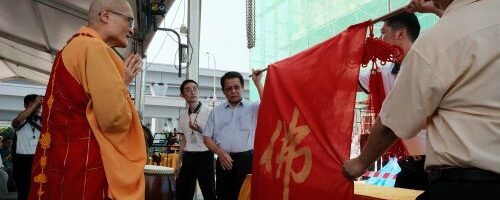
Representatives participating in the sprinkling ritual included Eddie Teh, Yap Thai Choy, construction project lead Khor Lye Hock and deputy project lead Tan Soon Keh. Ar. Heng Gee Hooi and Dato’ Vincent Lim Swee Chew carried the ceremonial golden beam and Buddhist banner for the topping out ritual.
Since the groundbreaking in September 2024, the new centre has steadily taken shape, with its five-storey structural frame now complete. Every stage reflects the construction team’s expertise and dedication, together with the shared aspirations of all who have supported the project. Work will continue on the mechanical and electrical systems, internal partitions and interior fit-out, with completion expected in 2028.
“We invite people to learn the Dharma, inspire them to practise it, and raise funds to support it.” Venerable Guo Huei encouraged everyone, especially young people, to take an active part in learning, practising, supporting and sharing the Dharma. Through collective efforts to build the centre and sustain its teaching activities, the Dharma can continue to flourish and benefit more people. With its convenient location and good transport links, he envisioned the new centre deepening DDM’s work in Malaysia while developing into its Southeast Asian hub for Chan practice and Dharma teaching, welcoming people from Malaysia and abroad.
Amid rapid technological advances, climate change and the pressures of modern life, Venerable Guo Huei reaffirmed DDM’s longstanding commitment to purifying minds and society. Building a centre provides a place where people can learn the Dharma and find peace within themselves, bringing greater harmony to their families, workplaces and communities. This begins with practising the Four Kinds of Environmentalism advocated by DDM founder Master Sheng Yen: protecting the spiritual, social, living and natural environments.
Plans for the new centre include flexible spaces for Chinese Chan meditation programmes and structured Buddhist education courses, serving people of different ages and levels of experience. Accommodation will support retreats and other practice programmes lasting a day or longer, allowing participants to deepen their practice and integrate the Dharma into everyday life. Facilities and resources will also be available to other orthodox Buddhist organisations committed to upholding the Dharma. International Buddhist courses, meditation programmes and seminars will foster learning, exchange and collaboration across borders.
We invite you to continue this journey with us. Your support for the new centre will help more people learn the Dharma and experience Chan meditation.