
20261019 | Chinese Chan Talk Series
Why Do We Fight Ourselves When We Want Peace of Mind?
Making Peace Within Through Faith in Mind
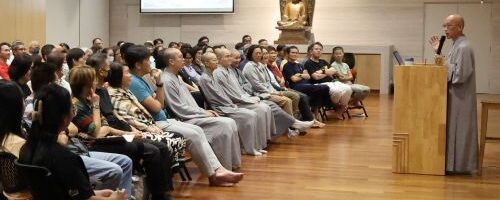
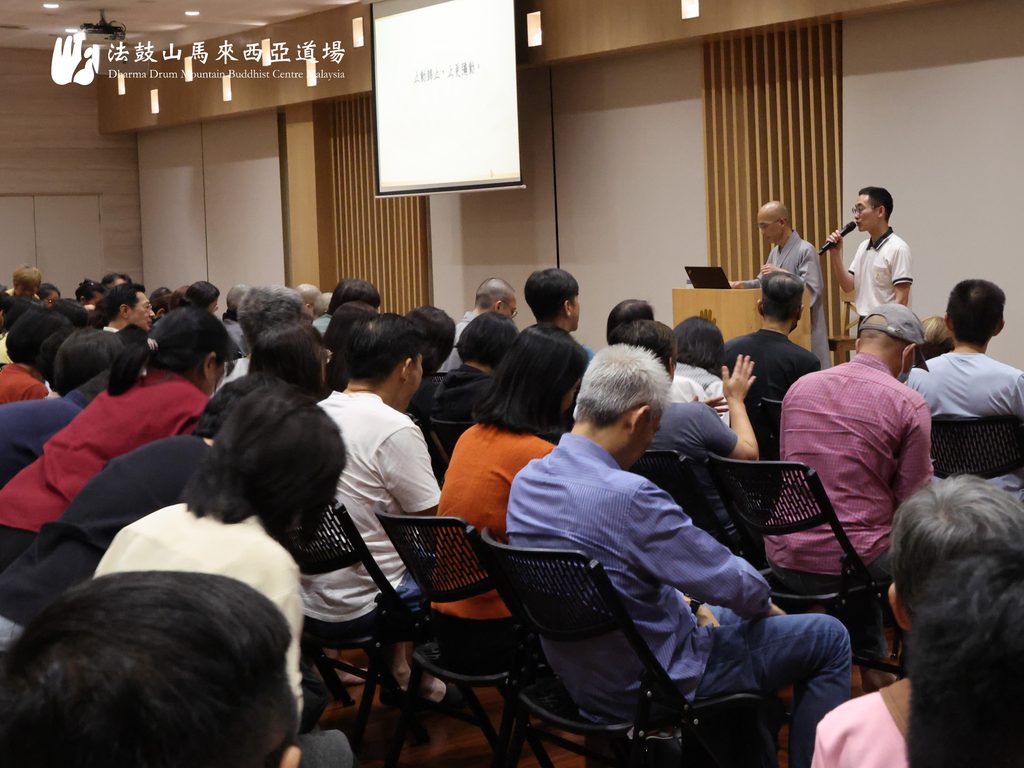
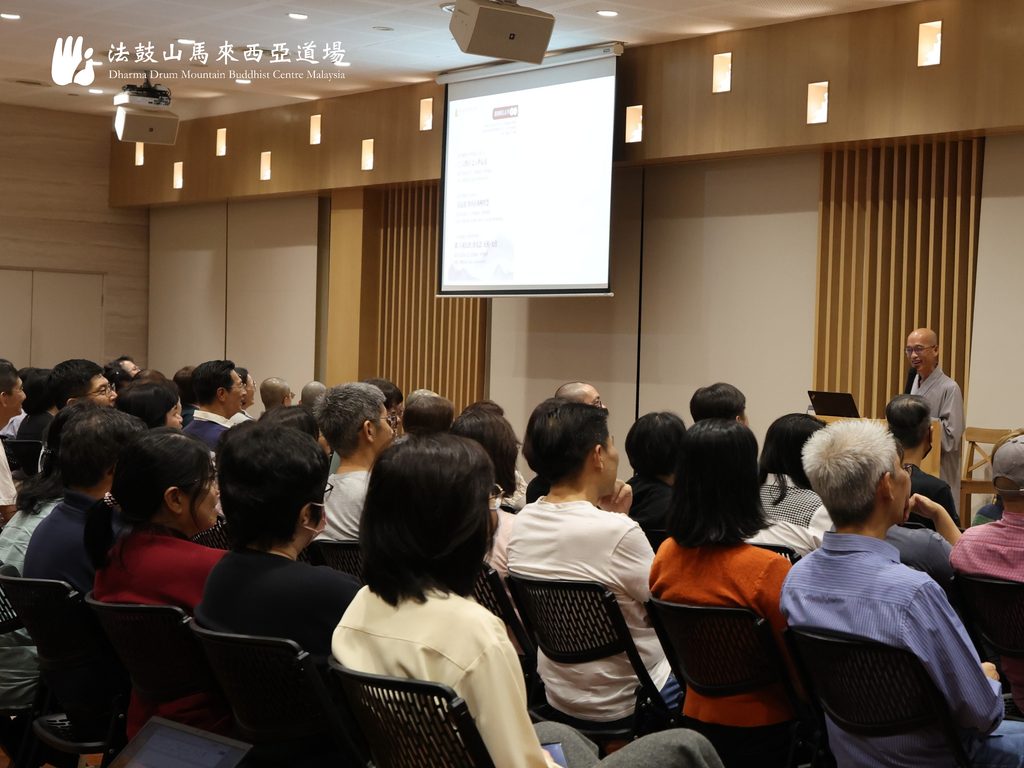
We try to hold on to what we like and push away what we dislike. We long for a settled mind, yet often find ourselves torn between wanting and resisting. On 19 October, more than 150 people attended a talk on Chinese Chan at Dharma Drum Mountain Buddhist Centre Malaysia, entitled “Making Peace Within Through Faith in Mind”. Venerable Chang Kuan, Vice President of Dharma Drum Sangha University, drew on Chan encounter dialogues – records of exchanges between Chan masters and their students, verses and examples from meditation practice to explore how observing our own minds can help us make peace within and put what we learn into practice in everyday life.
Who Is Binding You?
Faith in Mind is a 146-line Chan poem traditionally attributed to Master Sengcan, the Third Patriarch of the Chan school. Here, “faith in mind” means trusting that everyone possesses Buddha-nature and has the potential to awaken and attain Buddhahood. Venerable Chang Kuan also recounted Chan dialogues about finding peace of mind, repentance and liberation. In one, Daoxin, who would become the Fourth Patriarch, asked Sengcan for a method of liberation. “Who is binding you?” Sengcan asked. “No one,” Daoxin replied. If no one was binding him, Sengcan asked, why seek liberation? The exchange invites us to look again at how our own attachments become the bonds that bind us.
Seeing How Likes and Dislikes Divide the Mind
“The Supreme Way is not difficult, if only you do not pick and choose.” Venerable Chang Kuan led the audience in reciting Faith in Mind two lines at a time, identifying pairs of opposites such as love and hate, acceptance and resistance. To explore the “Supreme Way,” he turned to the Four Great Vows: why does “I vow to attain supreme Buddhahood” come last? Helping sentient beings, ending afflictions and learning Dharma methods all put the aspiration to Buddhahood into practice. Sentient beings are innumerable and their afflictions differ, so different methods are needed to work with the mind. In everyday life, judging everything solely by whether it suits us can divide our experience into rigid, opposing extremes. “Neither love nor hate, and you will clearly understand.” Venerable Chang Kuan encouraged the audience to notice how their likes and dislikes shape their judgements when dealing with situations.
When the Calm We Seek Feels Unfamiliar
The same tension can arise in meditation. Some people long for a settled body and mind, yet become anxious when they actually settle down. A mind accustomed to being busy may resist this unfamiliar calm. This illustrates the poem’s teaching that conflict between acceptance and resistance is an affliction of the mind. Venerable Chang Kuan compared our changing physical and mental states to waves. Whether we feel calm or unsettled, we can recognise what is happening, relax the body and mind, and return to our method. The point is not to chase calm or resist disturbance, but to see both as changing conditions and to return to the method. In this way, we learn to keep practising amid change.
Giving Faith a Practical Foundation
The talk concluded with the story of Suddhipanthaka, a disciple of the Buddha whose poor memory made it difficult for him to retain what he recited. Frequently scolded by his elder brother, he eventually received the Buddha’s patient guidance. Repeating “I sweep away the dust; I remove the dirt,” he made sweeping the ground his practice and eventually attained liberation as an arhat. Venerable Chang Kuan used the story to encourage everyone to persevere with a method suited to their individual disposition and capacity. Family life, work and daily chores all offer opportunities to recognise attachment and aversion and loosen their grip. In this way, confidence in our capacity for Buddhahood is grounded in everyday practice.
Text by Lo Chee Hoe
Photos by H’ng Soon Chai